I'd been to a coffee farm before this one, in Medellín. So I knew, walking into Panama, what a working farm was supposed to feel like. I wasn't braced for how different this one would be.
I'd first learned about Geisha in Colombia, then learned that Panama grows some of the rarest expressions of it anywhere in the world. The environment there is something almost no other region can claim. I knew I wanted to go understand what actually made that coffee so special, not just read about it.
You can drive to Boquete from Panama City, but it's about six hours. I flew instead. Forty-five minutes, early in the morning, then another hour by car from the airport up into the highlands.
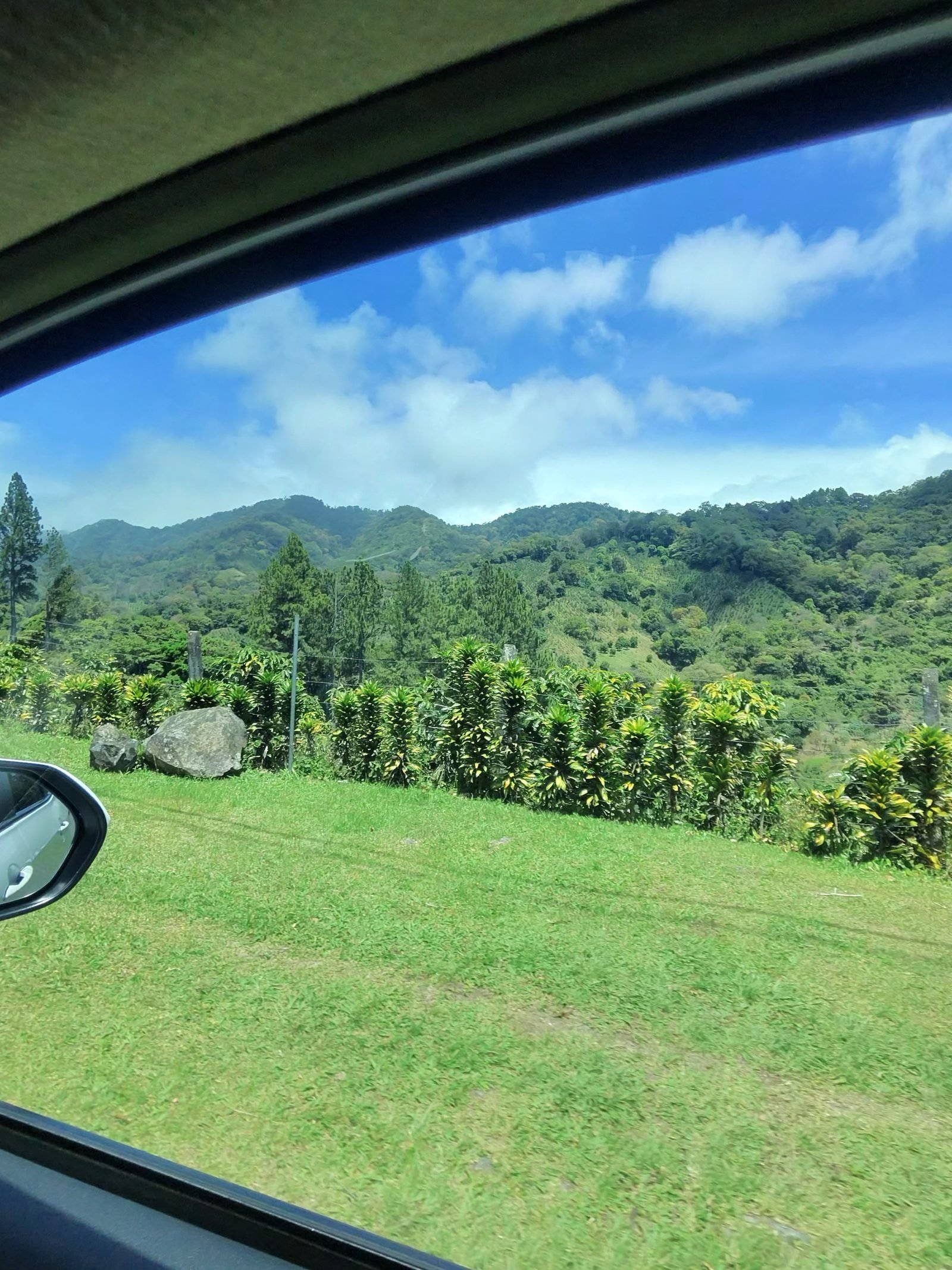
The elevation hits you before anything else does. Panama City had been brutally hot. As the road climbed, I could feel the air change, cooler, crisper, a real breeze instead of heat sitting still. We were surrounded by volcanoes the whole way up, with some very light rain that felt like it was just part of what that environment does. I remember looking out at the valleys and the mountains as we climbed and thinking I'd never seen anything quite like it. Lush, clean air, and at one point the sky cleared into this deep, perfect blue with the sunlight hitting the hills exactly right.
Medellín is humid, and I don't think there are volcanoes in that region the way there are here. Different elevation, different air, different light. But both places gave me the same feeling once I was actually standing in the vegetation. A kind of peace I don't find many other places. Farmland does that to me.
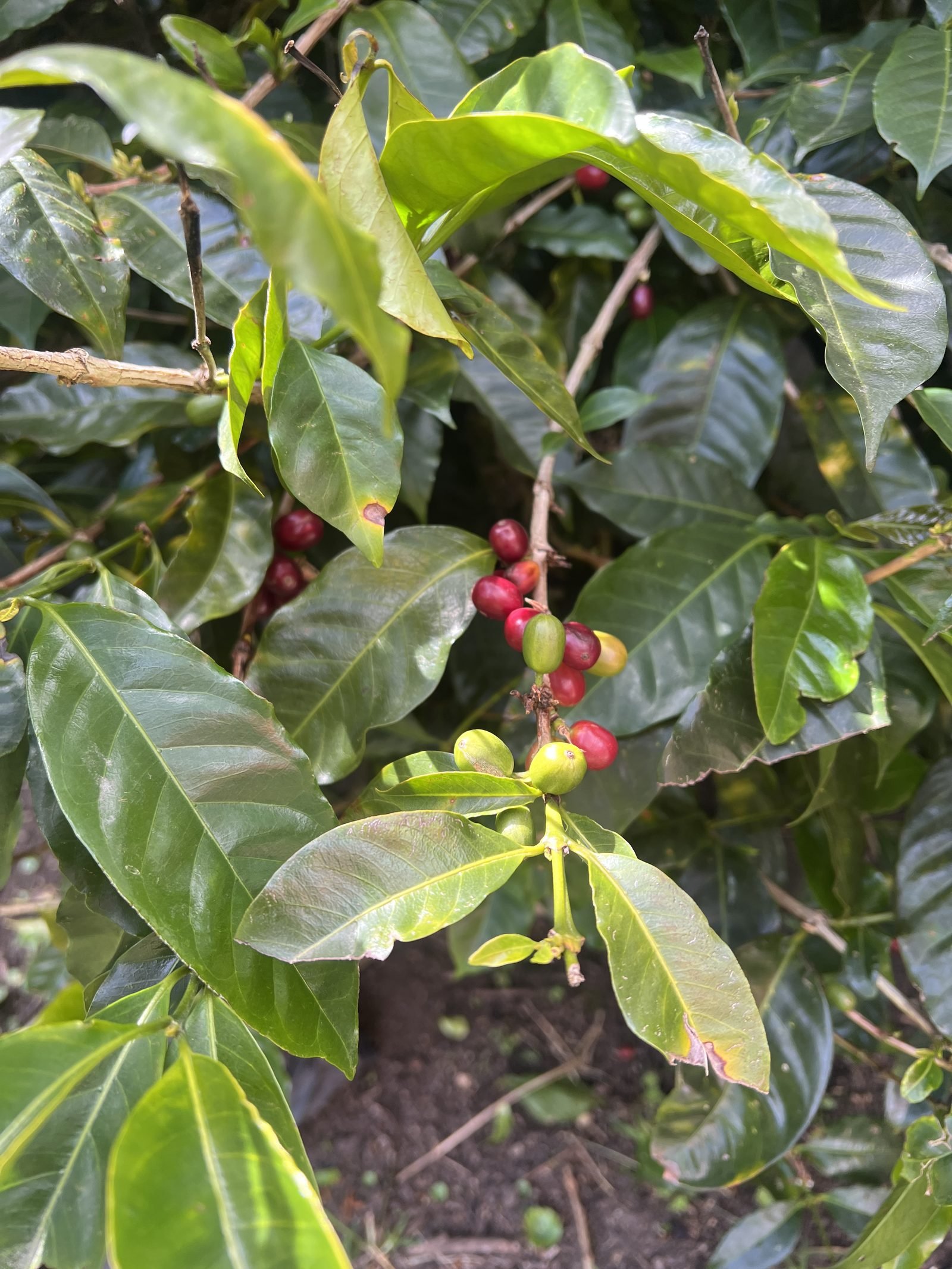
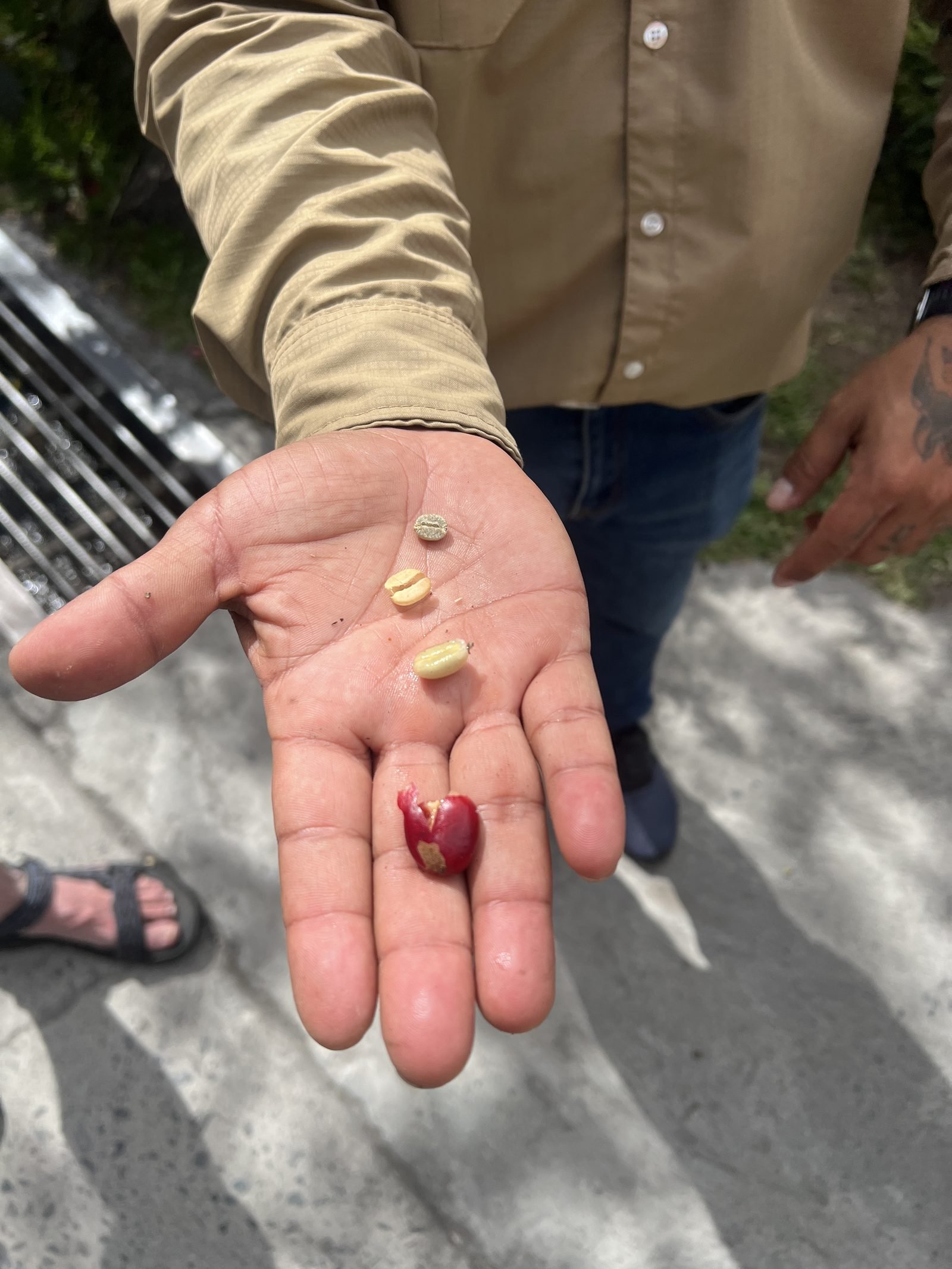
Before any of the tasting, they walked us out to the rows. This farm uses local, native workers from the region, not machines. A machine takes whatever's hanging on the branch that day, ripe or not. I watched a hand move along a branch and stop on exactly one cherry, the red one, not the one beside it that was still a shade off, and pull only that. Then move to the next branch and do it again. Hundreds of times. Thousands, across a single morning.
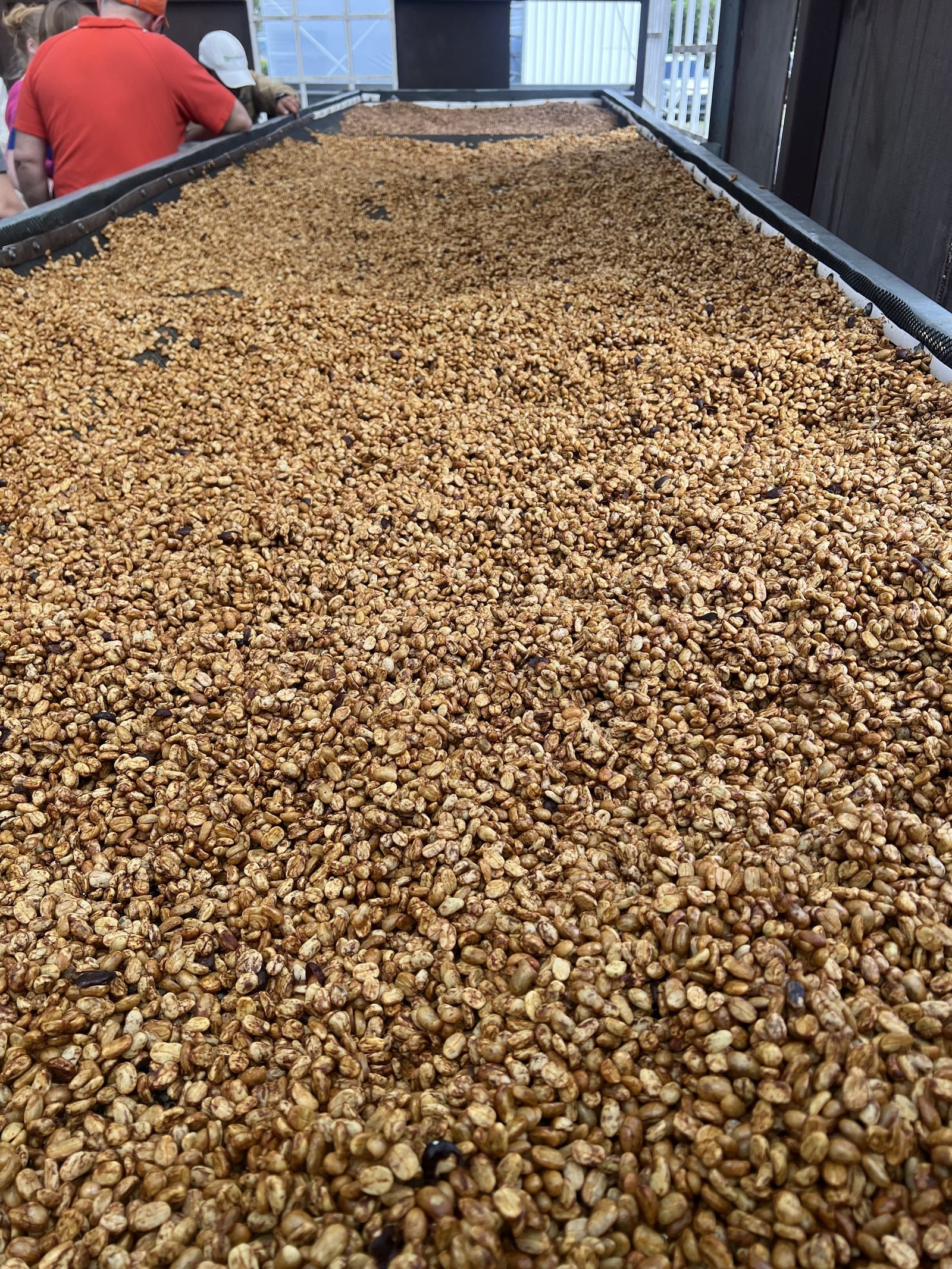
At the drying stage, they let me smell and taste the honey beans straight from the bed. The smell hit before anything else, almost like molasses, something dark and sweet I wasn't expecting from a coffee bean. Then a tartness underneath it, faint, the kind that sneaks in after the sweetness has already convinced you of something else. I stood there longer than I needed to.
Later, at the end of the tour, they walked us through a full cup tasting, every stage side by side. Washed, honey, natural, and one more, a different varietal called Catuai. Tasting them that way, brewed and side by side, was a good reminder of what makes Geisha worth what it costs. Catuai is the workhorse, the variety farms lean on for yield and consistency. Geisha is the one nobody can fully explain — floral, almost tea-like, a flavor that doesn't behave like coffee is supposed to.
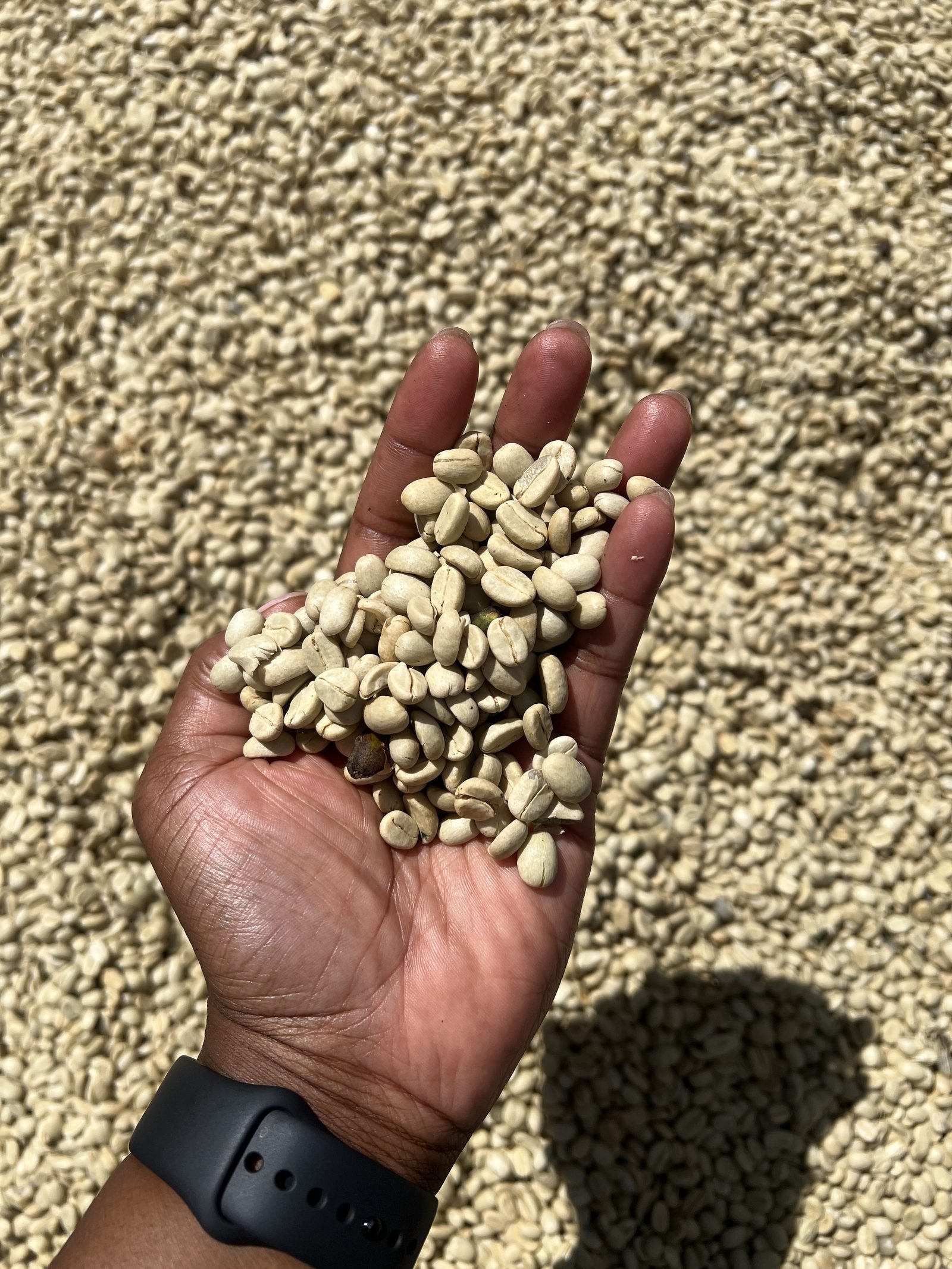
That's the part nobody tastes directly, but it's in every cup anyway. Every cherry I tasted that day, whatever stage it came in, had already passed through someone's hand once, judged, and chosen. The drying bed doesn't know the difference between a ripe cherry and a close one. The hand does.
I flew home with all three bags, washed, honey, natural. I still think about that cup at the end of the tour, the molasses, the tartness underneath it. But mostly I think about the hand on the branch, choosing one cherry over the one right beside it, long before any of it became something I could drink.
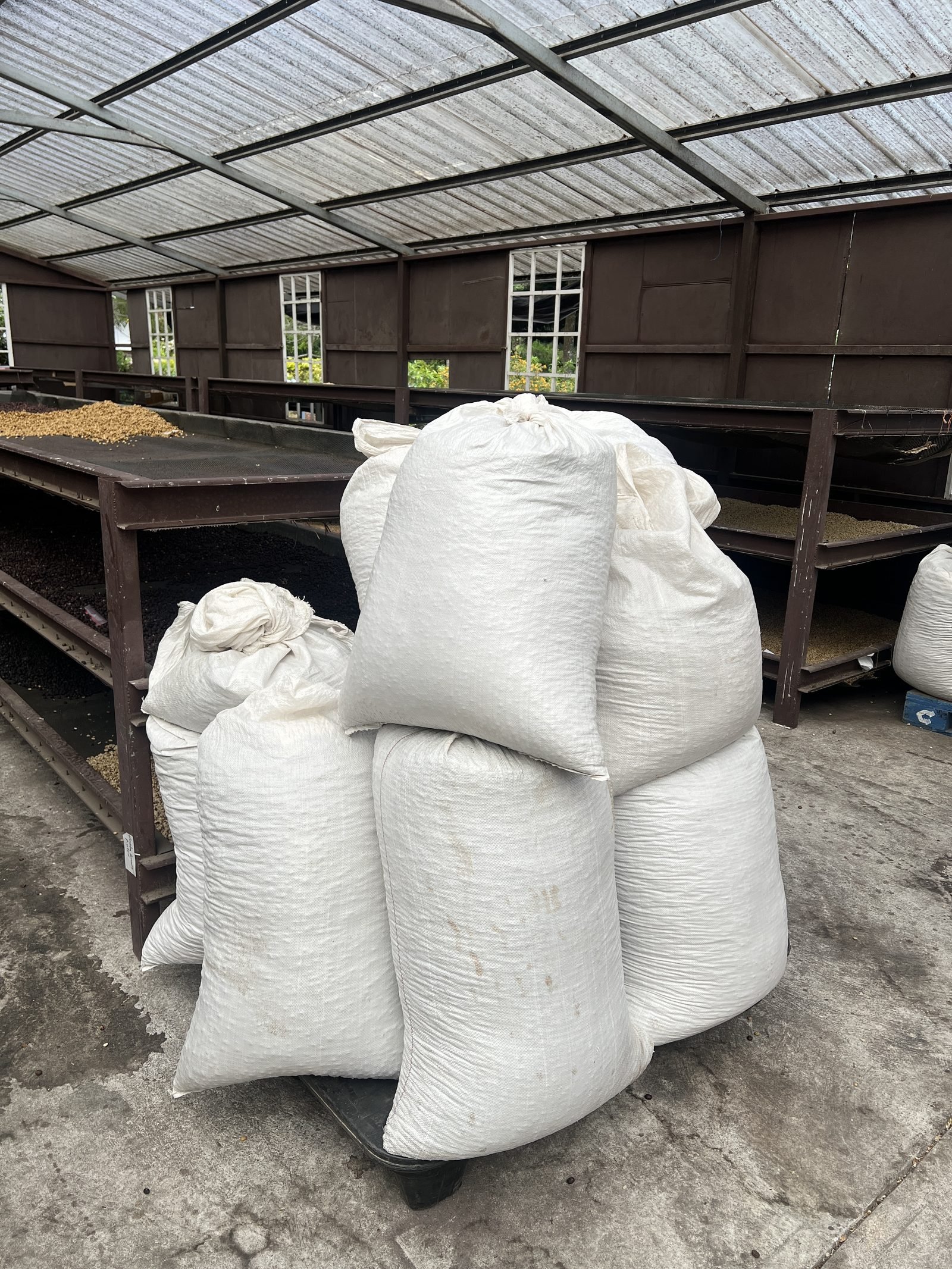
Those three bags became the start of what's now Maison Touré.